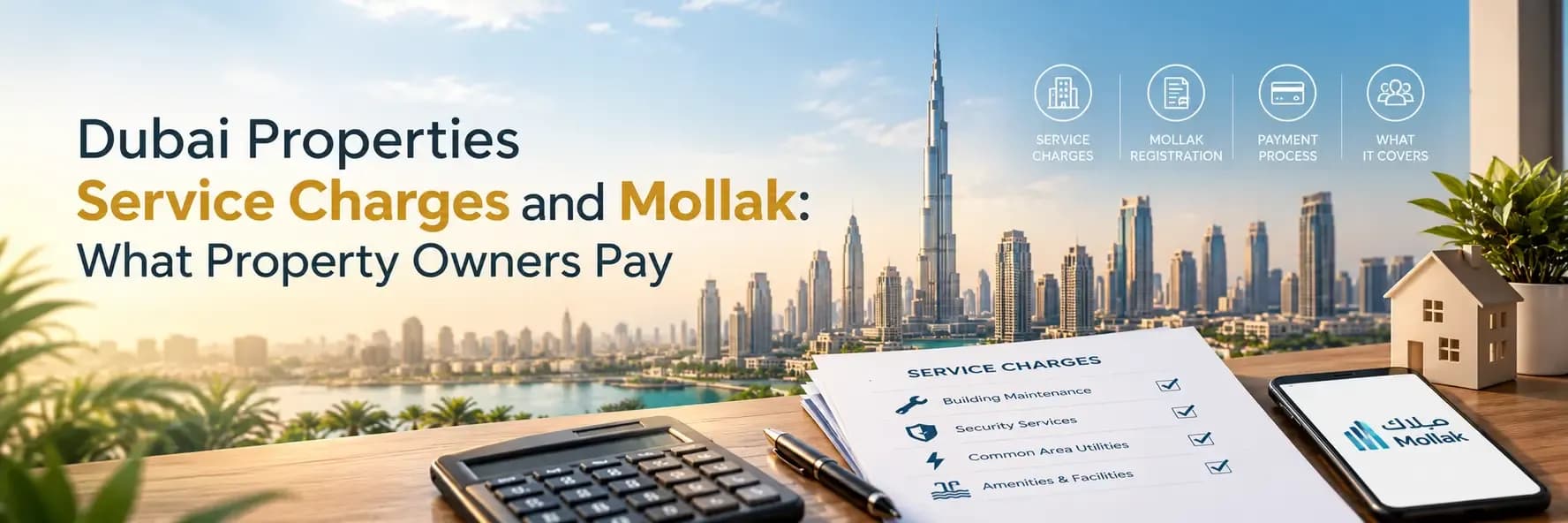
Understanding Service Charges and Mollak: What Dubai Property Owners Pay
2026-09-21
Understanding Service Charges and Mollak: What Dubai Property Owners Pay
When buying a property in Dubai, the purchase price is only half the story. Every year after that, an invoice shows up for common area maintenance, security, landscaping, and a handful of other line items most first-time buyers never budgeted for. Dubai property service charges aren't hidden or arbitrary though, they run through a regulated system called Mollak, and understanding how it works makes the difference between an unpleasant surprise and a number you planned for from day one.
This guide covers what Mollak actually is, how your service charge gets calculated, what a fair rate looks like for your area, and what happens if a bill goes unpaid.
What Is Mollak in Dubai?
Mollak, Arabic for "owner," is the centralized digital platform the Dubai Land Department (DLD) and RERA use to regulate jointly owned properties. It exists to standardize how service charges are set, reviewed, and collected, and to give owners a paper trail they can actually check.
Mollak handles a few core jobs:
Registration: property management companies and owners' associations register their service charge accounts through the system
Budget oversight: every annual service charge budget has to be reviewed and approved under DLD and RERA guidelines before it's valid
Transparency: owners can access audited financial records rather than take a management company's word for it
Collection: it's the system through which maintenance fees for shared facilities actually get paid
Owners can pay through three channels: the Dubai REST app (select Mollak services and pay directly), the Mollak portal on the DLD website, or a bank transfer into the escrow account your management company provides.
Mollak Dubai: How Service Charges Actually Get Set
Here's the part most owners don't realize: a property manager can't just decide to raise your fees. Under the Mollak system, no service charge invoice can legally be issued until the annual budget has been submitted, reviewed by an independent audit firm, and approved by the DLD. No manager can raise fees mid-year without that same approval.
Once approved, the process is fairly strict:
Collected funds must be deposited into a DLD-regulated escrow account within seven working days
RERA monitors access to that account to prevent unapproved spending
A portion of the budget, typically 5–10%, goes into a separate sinking fund reserved for major repairs like elevator overhauls or roof replacement, and even emergency access to that fund needs specific RERA authorization
It's a slower, more bureaucratic process than a management company just sending an invoice, but it's the reason Dubai's service charge system is considered more transparent than most.
Service Charges Dubai: What You're Actually Paying For
A service charge bill isn't just "building fees" it's a bundle of specific costs:
Common area maintenance: cleaning, repairs, and upkeep for lobbies, corridors, elevators, staircases, and parking
Security and building insurance
Landscaping and amenities management (pools, gyms, shared gardens)
A management fee, usually 10–15% of the total budget
The sinking fund contribution mentioned above
The math itself is simple once you know your building's approved rate: unit size in square feet × approved rate per square foot = annual service charge. A 1,000 sq ft apartment at an approved rate of AED 15 per sq ft comes out to roughly AED 1,125 a month, or AED 15,000 a year. Your building's exact approved rate is visible through the Mollak system, and it's worth checking before you buy, not after.
Service Charge Index Dubai: Typical Rates by Area
The DLD publishes an annual Service Charge Index that sets the approved range for each community. Rates vary a lot depending on how many shared amenities a building carries, so treat these as indicative rather than exact:
Community
Typical Rate (AED/sq ft/year)
Palm Jumeirah
~35, range 22–62.50
Downtown Dubai
~28, range 18–44
Dubai Marina
~16–22, range 14–35
Business Bay
~15–18, range 12–52
Dubai Hills Estate
~16, range 13–22
Dubai South / Expo City
~10, range 8–13
Arabian Ranches 2 (villas)
~2.44
Villas generally sit far lower than apartments, since there's less shared infrastructure to maintain, while towers with extensive amenities (pools, gyms, concierge) land at the higher end. Always check your specific building's approved figure through Mollak or the Dubai REST app rather than relying on area averages, since the range within any one community can be wide.
What Happens If You Don't Pay
Service charges aren't optional, and the enforcement path is more serious than many owners expect. Unpaid charges typically escalate through:
Direct engagement from the management company to recover the arrears
Referral to the Rental Disputes Settlement Centre (RDC), the judicial arm of the DLD with jurisdiction over jointly owned property disputes, under Law No. 6 of 2019
Enforcement proceedings, which can ultimately result in a unit being sold to settle the outstanding balance
Owners facing accumulated arrears can apply for the Tayseer programme, launched in 2025, which sets up a structured repayment plan before things escalate to the RDC. One detail that catches landlords off guard: you remain personally liable for service charges even if your tenancy contract assigns payment to the tenant. The DLD holds the owner responsible, not the lease.
Why This Matters When You're Choosing a Property
Service charges directly affect your real return, a lower purchase price doesn't mean much if the annual charge eats into your rental yield every year after. It's one more reason boutique, well-managed developments are worth a serious look: fewer shared amenities to maintain per unit generally means a more proportionate charge relative to what you're actually using.
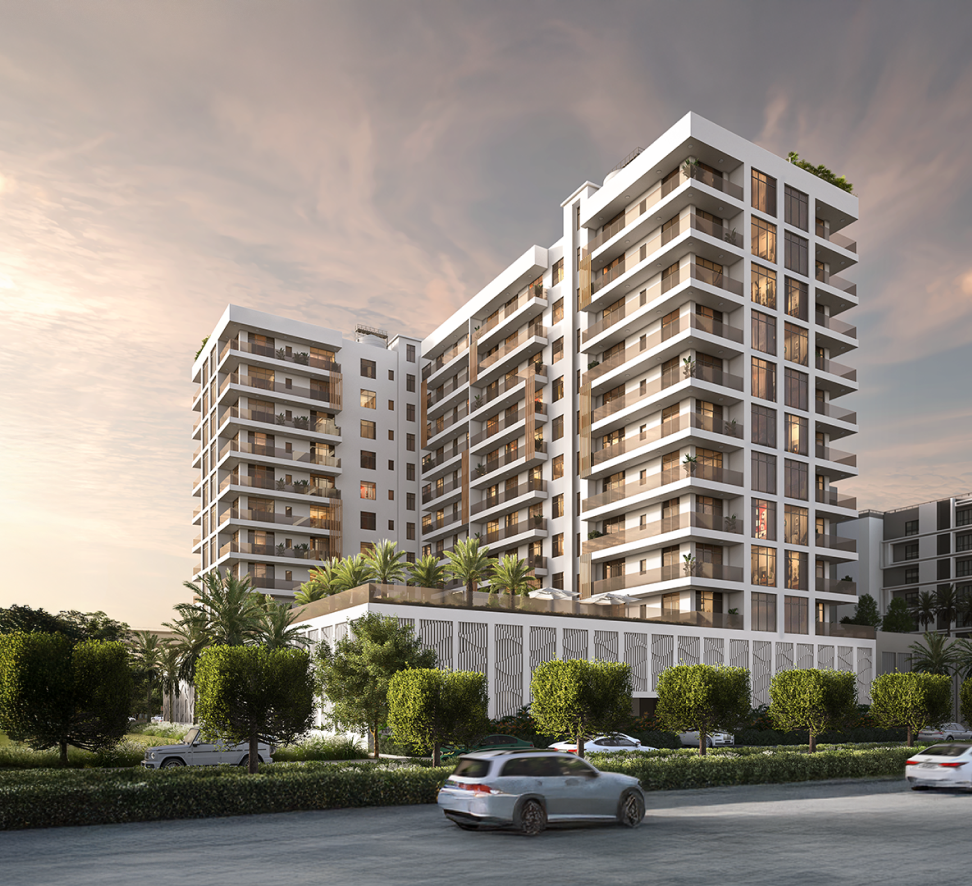
Every RERA-registered developer has to run its service charge budgets through Mollak the same way, including the projects atPurvanchal, such asTriana Residences in Jumeirah Garden City andSunbliss Residences in Al Furjan. Both are boutique-scale by design, which is worth factoring in alongside the purchase price when you're comparing what a property will actually cost you to hold long-term.
Frequently Asked Questions
1. What is Mollak in Dubai?
Mollak is the DLD and RERA's digital platform for regulating service charges on jointly owned properties. It handles budget approval, fund collection, and transparency, so owners can see exactly how their money is being used.
2. How are Dubai properties service charges calculated?
The formula is straightforward: your unit's size in square feet multiplied by the DLD-approved rate per square foot for your building. That approved rate is published through Mollak and reviewed annually.
3. What is the Dubai service charge index?
It's the DLD's annually published set of approved rate ranges by community, used to standardize and benchmark charges across similar buildings. It's also the tool buyers use to sanity-check a rate before purchasing.
4. What happens if I don't pay my service charge?
Unpaid charges escalate from management company collection efforts to the Rental Disputes Settlement Centre, and in serious cases, a unit can be sold to recover the debt. Owners stay liable even if a tenant was supposed to cover the cost.
5. Can I dispute or lower my service charge?
Owners can raise concerns collectively through their owners' association if a charge seems disproportionate to the services delivered, since no fee increase is valid without DLD approval in the first place. For serious disputes, the Rental Disputes Settlement Centre has jurisdiction over jointly owned property disagreements.