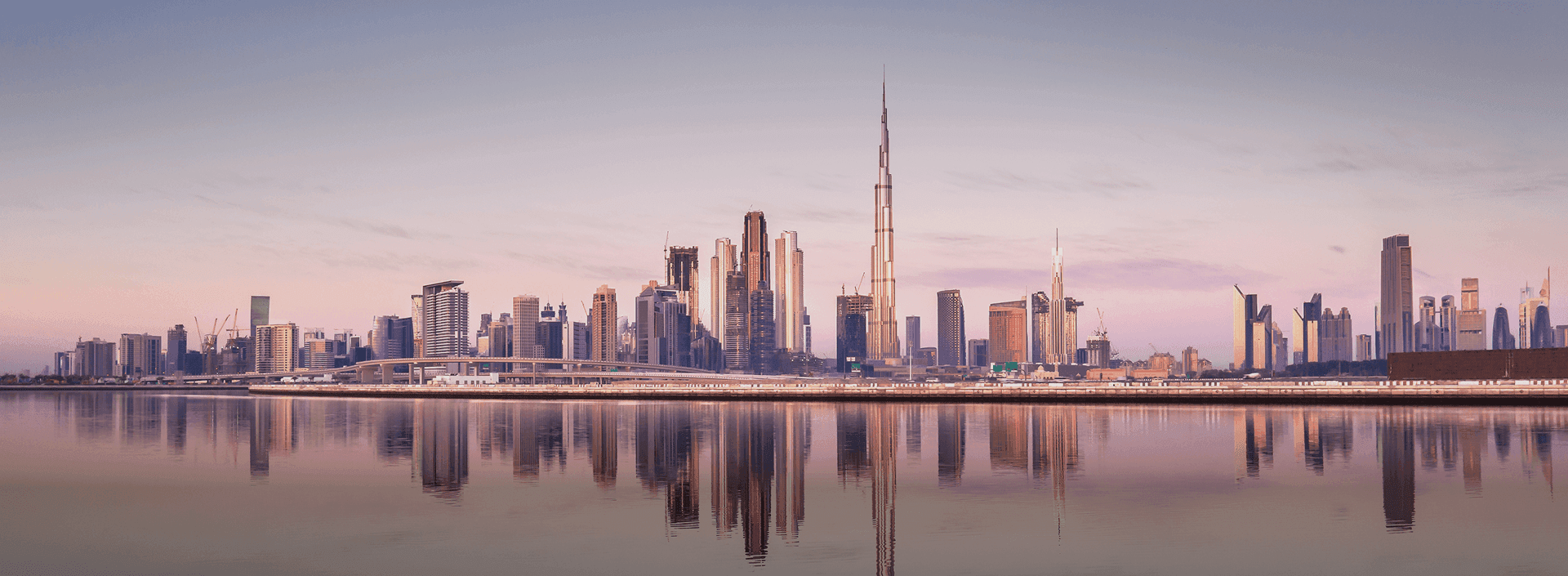
Dubai's property market is not one market. It is at least four.
There is the established prime market — places like Dubai Marina and Downtown that have been minting steady returns for over a decade. There is the mid-market ROI engine — JVC, Al Furjan, and Arjan, where yields routinely hit 7-9%. There is the future-prime emerging tier — Dubai Creek Harbour, Palm Jebel Ali, and Dubai South — where early entry today buys into tomorrow's blue-chip address. And there are the quiet contrarian picks — central pockets and growth corridors that most international buyers overlook until prices have already moved.
The best real estate investment in Dubai depends entirely on which of those tiers fits your goals, timeline, and risk appetite. So this guide does not give you a single "best place to buy property" answer — it gives you nine hotspots, organised by tier, with hard 2026 numbers and the trade-offs each one carries.
Read this before you commit to a single area. The framework below will help you identify the best real estate investment in Dubai for your specific goals, not just the area someone else thinks is the best.
Best Property Investment in Dubai: 2026 Hotspots at a Glance
The shortlist first. Detailed area breakdowns follow.
Area
Tier
Gross Yield
Entry Price
Dubai Marina
Established prime
6.2–8%
AED 800K+
Business Bay
Established prime
6–7%
AED 550K+
Dubai Hills Estate
Premium masterplan
5–6.5%
AED 1.4M+
JVC
Mid-market ROI
7–9%
AED 500K+
Al Furjan
Mid-market ROI
6.5–8.5%
AED 600K+
Dubai Creek Harbour
Future-prime
5.5–7%
AED 1.2M+
Dubai South
Emerging
Up to 8%
AED 500K+
Jumeirah Garden City
Contrarian central
5–7%
AED 1M+
Jebel Ali Hills
Emerging villa
4.5–6%
AED 3M+
Tier 1: Established Prime Hotspots
These are the addresses with proven track records, deep tenant pools, and the highest resale liquidity. Yields are not the highest in the city, but the certainty is. For investors looking for the best property investment in Dubai with established performance data behind it, this tier is where you start.
1. Dubai Marina
Dubai Marina is the most liquid residential market the city has. Studios start around AED 800,000, 1-beds at AED 1.2 million, and yields range 6.2–6.5% for ready stock with select buildings clocking 8% on short-term rental strategies. Tenant turnover is high, but so is demand — vacant units re-lease in 2-4 weeks.
Why it still works: walkable promenade lifestyle, JBR beach access, 2 metro stations, the highest concentration of dining and retail outside Downtown. International buyers gravitate here for short-term holiday rental income and resale liquidity. If you want a property you can sell in 2 weeks rather than 6 months, this is the area.
2. Business Bay
Business Bay is the central balanced play — a stone's throw from Downtown but priced 30-40% lower. Studios start at AED 550,000, 1-beds at AED 750,000. Gross yields of 6-7%, with strong tenant demand from DIFC professionals who want to skip the Downtown premium.
The Bay has been quietly maturing. New residential towers, expanded retail, the canal-side promenade, and growing multinational HQ presence are reshaping it from "office district" into a genuine mixed-use urban hub. For investors, the play is steady cash flow plus a tailwind from Downtown's continued price escalation pulling Business Bay up with it.
3. Dubai Hills Estate
Dubai Hills is the family masterplan that consistently delivers. Apartments from AED 1.4 million, villas from AED 5 million up to AED 40 million. Yields run 5-6.5% — lower than mid-market areas, but tenant retention is exceptional. Families who move in tend to stay 5-7 years.
This is the best property to buy in Dubai if you are buying for end-use as a family home plus long-term capital growth. Schools (GEMS Wellington, Repton, Dubai Hills School), parks, the Dubai Hills Mall, and walkable infrastructure make this an actual community, not just a development. Resale demand stays strong because the next family always wants in.
Tier 2: Mid-Market ROI Engines
If your priority is yield and the cash flow it produces, this is where the maths works hardest. Yields of 7-9% are not unusual in this tier. For pure income-focused investors, this is genuinely the best place to invest in Dubai right now.
4. Jumeirah Village Circle (JVC)
JVC has earned its reputation as one of Dubai's ROI kings. Mid-market hubs like JVC and Arjan are tracking 7-9% yields in 2026, driven by strong tenant demand and a 14% gap between supply and demand. Studios start around AED 500,000, 1-beds at AED 700,000-900,000. Studio yields can touch 7.87%, with three-bedroom flats around 7.21%.
What works here: 30+ public parks, Circle Mall, walkable streets, and a deep tenant base of young professionals and small families. The area has matured infrastructure-wise but pricing has not yet caught up with established prime areas — that gap is what continues to deliver the yield.
5. Al Furjan
Al Furjan is the quieter ROI play that most international investors miss until they actually run the numbers. Apartments from AED 1,350-1,400 per sqft (cheaper than Marina or Downtown despite the same metro network). Studio yields can reach 8.5%. Villa transactions in Tilal Al Furjan and Murooj Al Furjan have shown over 90% capital appreciation since launch.
The metro changes everything. Two stations on the Route 2020 line (Al Furjan and Discovery Gardens) give residents real public transport access — rare for villa-style communities. Schools, two retail pavilions, and direct connectivity to Sheikh Zayed Road and Mohammed Bin Zayed Road make this one of the strongest balanced plays in the city.
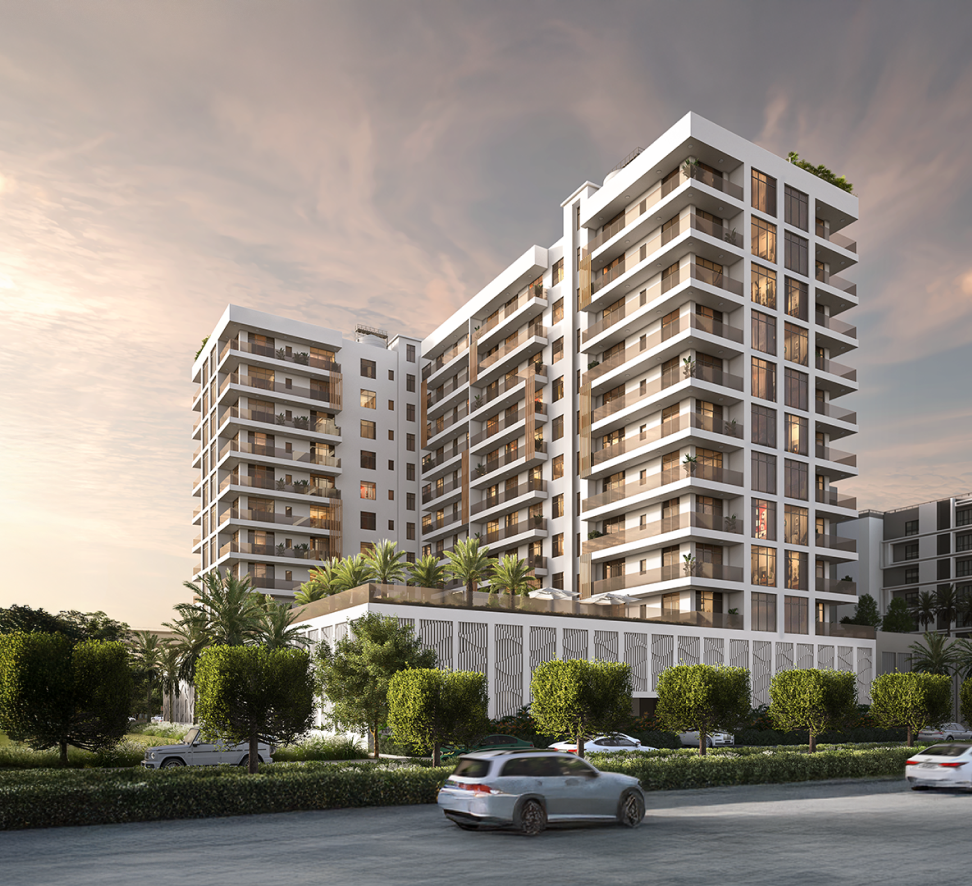
Worth a closer look: Sunbliss Residences and our townhouse offerings in Al Furjan combine smart layouts with the area's strong yield fundamentals. For investors prioritising cash flow with growth on the side, this is one of the cleanest entry points in Dubai right now.
Tier 3: Future-Prime Emerging Hotspots
This is where capital appreciation does the heavy lifting. You sacrifice some current yield in exchange for getting in early on what will become tomorrow's prime addresses. If your timeline is 7-10 years, this tier consistently delivers the best property to buy in Dubai for pure growth strategies.
6. Dubai Creek Harbour (DCH)
Dubai Creek Harbour is Downtown 2.0 — and that is not just marketing. The area trades at a 25-35% discount to Downtown Dubai prices in 2026, with comparable Emaar build quality. Average price sits at AED 2,424 per sqft, gross yields at 5.9%. Property values rose 12% in early 2025 alone after the Metro Blue Line announcement, and Island District occupancy has hit 88% — proving sustained end-user demand.
This area also became Dubai's first to fully implement 5.5G smart infrastructure. AI-driven traffic and waste management have reduced community service charges by roughly 12% versus older developments. For long-term capital appreciation, DCH is structurally positioned to outperform — Emaar's masterplans of this scale have historically seen 40-50% capital growth through completion.
7. Dubai South / Al Maktoum Corridor
Dubai South is the area most international investors will not look at seriously until 2028 — and that is exactly why early positioning makes sense now. Studios start around AED 500,000, 1-beds from AED 750,000. Gross yields can reach 8% in selective developments.
The catalysts are real and dated: Al Maktoum International Airport's expansion to become the world's largest, Etihad Rail integration, the Expo City Dubai legacy district, and continuous federal investment in the southern logistics and aviation corridor. Recent Metro Blue and Gold Line approvals add another tailwind. This is a 7-10 year capital play, not a yield play. Buy here in 2026 and you are essentially buying Marina at 2008 prices, or Downtown at 2010 prices.
8. Palm Jebel Ali (Honourable Mention)
Worth flagging because the numbers are extreme. Palm Jebel Ali alongside The Oasis by Emaar accounted for nearly 32% of total off-plan transaction value in some recent months — despite representing a tiny fraction of total volume. AED 3.5 billion in contracts were recently awarded to construct 544 luxury villas.
If Palm Jumeirah was the ultra-luxury play of the 2010s, Palm Jebel Ali is positioning to be the equivalent of the late 2020s — twice the size, with sustainability and smart city tech baked in. Entry tickets are AED 18M+ for villas and rising fast. This is for ultra-high-net-worth investors only, but the long-term capital appreciation potential is the strongest in Dubai today.
Tier 4: The Contrarian Picks Most Investors Miss
These are the areas where the maths still works but the international investor crowd has not arrived yet. Higher upside per dirham invested, with the trade-off being you have to do more research to confirm the fit. Sometimes the best place to buy property is not the one trending on social media.
9. Jumeirah Garden City (Al Satwa)
Jumeirah Garden City is the central freehold pocket sitting directly opposite DIFC, Emirates Towers, and the Dubai World Trade Centre. Apartment prices average AED 2,093 per sqft, with year-on-year price growth around 7%. Gross yields of 5-7% on established stock, with newer off-plan projects projecting 7-9% based on DIFC commuter demand. Entry tickets from AED 1 million.
Why this is contrarian: most international guides skip it because the assumption is that central Dubai means tower blocks and short-term rentals. JGC is different — mid-rise, walkable, with a deep tenant pool of DIFC professionals who pay premium rents to skip the commute. This is genuinely undervalued for a true central address, and the gap is closing.
Worth a closer look: Triana Residences — our boutique 72-home project in the heart of Jumeirah Garden City, with studios from 375 sqft and direct access to the DIFC corridor in under 10 minutes.
10. Jebel Ali Hills
Jebel Ali Hills is the spacious villa play in Dubai's southern growth corridor. Villas from AED 3 million up to AED 10 million-plus, with yields lower than apartment-heavy areas (4.5-6%) but capital appreciation potential meaningfully higher as the southern corridor matures.
The catalysts are similar to Dubai South but scaled to villa buyers — Etihad Rail integration, Al Maktoum airport expansion, Dubai South masterplan, expanded road networks. For families wanting a real villa lifestyle with long-term appreciation, this is one of the most compelling emerging villa enclaves in the city. The investor crowd is not here yet, which is precisely the point.
Worth a closer look: Purvanchal Villa in Jebel Ali Hills offers spacious, thoughtfully designed homes for families and investors wanting a foothold in the southern corridor before pricing catches up.
How to Pick the Best Place to Invest in Dubai for Your Goals
After 30 years building homes and watching investor patterns, here is the cleanest framework for choosing the right tier and ultimately the best real estate investment in Dubai for your specific situation:
If you need monthly cash flow now: Tier 2 (JVC, Al Furjan). Yields of 7-9% with established tenant demand. Lower entry, faster lease-up.
If you want resale liquidity above all: Tier 1 (Dubai Marina, Business Bay). Mature markets that move quickly when you decide to exit.
If you are buying a primary or family home: Dubai Hills Estate. The premium pays back through community quality and long-term tenant retention.
If you have a 7-10 year horizon and want appreciation: Tier 3 (Dubai Creek Harbour, Dubai South). Lower yields today, much higher capital growth potential.
If you want a quiet trophy or ultra-luxury position: Palm Jebel Ali. Long horizon, ultra-high entry, generational asset.
If you want central living or contrarian value: Jumeirah Garden City. The market has not fully woken up to it yet.
If you want a villa with growth runway: Jebel Ali Hills. The southern corridor's most overlooked villa pocket.
Whichever tier you choose, a few practical basics still apply across all of them. Buy from a RERA-registered developer. Verify project status through the Dubai REST app. If you want a deeper end-to-end framework on strategy, area selection, and pitfalls, our wider guide for real estate investment in Dubai covers it in detail.
Make Your Investment Move with a Developer You Can Verify
The right area is half the decision. The right developer is the other half. Off-plan timing risks, handover quality, and resale value all sit downstream of who actually built the home you bought.
At Purvanchal Real Estate, we have spent over 30 years building thoughtfully designed homes — first across India, now in Dubai. Every project is RERA-registered, escrow-backed, and built to deliver. Our Dubai portfolio sits across three of the strongest tiers above: Sunbliss Residences in Al Furjan (Tier 2 — strong yields), Triana Residences in Jumeirah Garden City (Tier 4 — central contrarian), and Purvanchal Villa in Jebel Ali Hills (Tier 4 — emerging villa).
1. Which is the best place to invest in Dubai for the highest rental yield?
JVC and Al Furjan are currently the highest-yielding established mid-market areas, with gross yields of 7-9% on apartments. Studio units in well-located buildings can touch 8.5-9%. These yields beat both Tier 1 prime areas (typically 5-7%) and emerging zones (5-6% during build-out phase). For pure cash flow strategies, this tier remains the cleanest play in 2026.
2. What is the best property to buy in Dubai for capital appreciation?
Dubai Creek Harbour, Dubai South, and Palm Jebel Ali are the strongest capital appreciation plays for 7-10 year holds. DCH already trades at a 25-35% discount to Downtown with comparable build quality. Dubai South benefits from the Al Maktoum International Airport expansion. Palm Jebel Ali is the ultra-luxury equivalent. All three have established infrastructure pipelines, which is what separates real appreciation plays from speculative bets.
3. Is Dubai Marina still a good investment in 2026?
Yes, but for different reasons than 10 years ago. Marina is now a mature liquid market — yields of 6.2-8% (with short-term rental strategies pushing higher), strong tourism-driven demand, and the highest resale velocity in Dubai. It is no longer a high-growth play, but it is one of the most reliable income-plus-liquidity plays in the city. For investors who value being able to exit quickly, Marina is hard to replace.
4. How much do I need to start investing in Dubai real estate?
Studios in mid-market freehold zones like JVC, Al Furjan, and Dubai South start around AED 500,000-700,000. With booking deposits of 10-20% on off-plan and 7-8% in transaction costs, the practical entry point can be as low as AED 100,000-150,000 in cash for an off-plan studio. Ready properties typically need 25-30% upfront due to mortgage LTV caps for non-residents.
5. What are the risks of investing in Dubai property?
The main risks are construction delays on off-plan units, supply oversupply in newly handing-over areas (which can soften rents temporarily), and currency or geopolitical shocks affecting demand. RERA's escrow framework substantially mitigates developer risk. Choosing established freehold zones with strong infrastructure reduces oversupply risk. Diversifying across asset types and tiers is the cleanest hedge.
6. Off-plan or ready property — which works better in 2026?
Off-plan typically delivers 20-30% capital appreciation by handover but no rental income during construction (2-4 years). Ready property gives immediate rental yield (6-8% gross) but slower capital growth. For 3-7 year holds, off-plan often wins on total return. For investors needing income from day one, ready property is the better fit. Many investors hold both — off-plan in emerging tiers for appreciation, ready stock in mid-market for cash flow.